The UGC Campaign Playbook: How to Pay Customers for Posts Instead of Strangers
Most UGC campaigns pay strangers for content about products they've never used. Here's how to pay your actual customers instead, at a fraction of the cost.

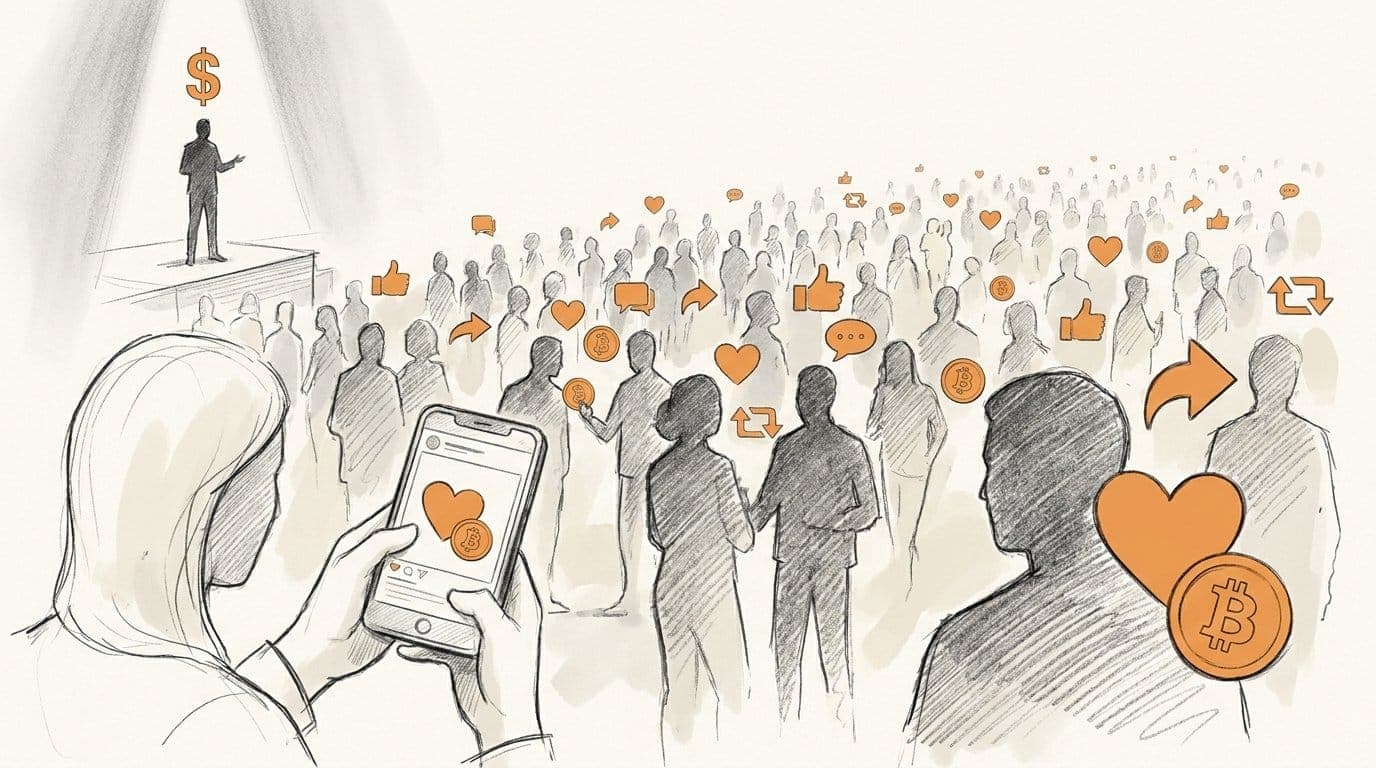
The premise of a user-generated content campaign is that a real customer's post is more trustworthy than a brand's ad. Academic research from Northwestern's Spiegel Research Center found that product pages displaying authentic customer content converted up to 270% better than pages without it. Bazaarvoice's 2024 Shopper Experience Index, based on a Savanta survey of 8,000 consumers, found that 78% of shoppers say customer-created content influences their buying decisions.
Then look at who's actually creating that content on every major UGC platform.
Billo matches brands with freelance creators. Soona does the same. Cohley. The UGC Agency. House of Marketers. Every one of these platforms pays strangers to make videos about products they've never used. The people creating "user-generated content" aren't your users.
That gap has been tolerated because the alternative, paying your actual customers, used to be impractical. Paying in dollars triggers tax and regulatory issues. Paying in points feels like a discount, not a thank-you. Gift cards are unwieldy for small amounts. The customer-paid UGC campaign has been the obvious answer for a decade, but nobody built the plumbing.
Bitcoin rewards changed the math. This playbook walks through how a customer-paid UGC campaign actually works, what it costs compared to the alternatives, and how to decide whether it fits your business.
What counts as a UGC campaign
A UGC campaign is any structured program where a brand encourages, collects, and redistributes customer-created content: photos, videos, written reviews, social posts. The word "structured" matters. Organic word-of-mouth isn't a UGC campaign. A formal program with rules, incentives, and a feedback loop is.
That makes it distinct from a few adjacent things people confuse it with:
- Influencer marketing contracts specific creators for specific deliverables. The audience reach is the product.
- Creator marketplaces like Billo and Soona source freelance creators for brand-commissioned videos. Those videos often get labeled "UGC" in ad creative, but the creators weren't customers first.
- Reviews are one narrow subtype of UGC. A review campaign is a UGC campaign, but a UGC campaign is broader.
- Social listening tracks mentions and reshares without any incentive structure. It's valuable but not a campaign.
- Social engagement rewards pay customers for content engagement (follows, subscriptions, likes) rather than content creation. They layer well with UGC campaigns but aren't the same thing, and shouldn't be confused.
A real UGC campaign asks customers to create something, gives them a reason to, and has a plan for what to do with the output. The five models that follow all fit that definition. They just differ in who the customer is, what they're paid, and whether the output is worth the spend.
Why customer UGC outperforms brand content
The same stats get repeated everywhere, so here's what's actually sourced:
- Northwestern/Spiegel (2017): Product pages displaying customer reviews converted up to 270% better than pages without them. The lift scales with review count and peaks around 50 reviews per product.
- Bazaarvoice Shopper Experience Index Vol. 18 (Savanta survey, September 2024, 8,000 consumers): 78% of shoppers say customer-created content influences their buying decisions. 65% want to see more UGC on the product pages they visit.
- Nosto/Stackla (2019): 79% of shoppers said UGC highly impacts their purchasing decisions. The stat is widely cited, though the survey is seven years old.
The mechanism is social proof, and it's been well-studied since Robert Cialdini wrote about it in 1984. People look to what others are doing, especially others they see as similar to themselves, when deciding what to do. A photo of a woman your age wearing a dress gives you a signal your brand-commissioned model shoot cannot. Your aunt's post about coffee roasters in Omaha converts differently than a paid creator's hashtag campaign.
The catch: this all assumes the content is from real customers. If the "customer" in your UGC is a Billo freelancer who pulled the product out of a box yesterday, you're getting content that looks like UGC but doesn't carry its social-proof signal. Audiences have gotten better at spotting the difference, and platforms now label branded content.
There's a harder version of this problem now. The latest AI video tools can generate posts that look like UGC without a real person ever holding the product. TikTok and Meta label what they can detect; most slips through. As audiences see more AI content passing as organic, the trust ceiling on any unverified post drops, and content that's provably from a real customer commands an authenticity premium. The customer-paid model is the one version where that verification is structural: only verified paying customers can submit, so the "real" is built in.
The gap between "content that looks like UGC" and "content that is UGC" is where the customer-paid model fits.
The five ways to run a UGC campaign today
There are five practical models for collecting customer content in 2026. Each has a different cost structure, creator pool, and measurability profile.
| Model | Who creates | Where they come from | Typical cost | Measurability |
|---|---|---|---|---|
| Influencer marketing | Contracted creators | Pitch or agency | $100 to $10,000+ per post | Weak |
| Creator marketplaces (Billo, Soona) | Freelance "UGC creators" | Platform talent pool | $93 to $500+ per video | Medium |
| Enterprise UGC platforms (Bazaarvoice, Cohley, Greenfly) | Mixed, mostly reviews | Platform rights management | $10,000+ per year, demo-gated | Strong but overbuilt for small business |
| Contest or hashtag campaigns | Anyone with a phone | Public promotion | $0 to thousands in prizes | Weak |
| Customer-reward campaigns | Verified paying customers only | Post-purchase loyalty layer | Merchant-configurable, ~$1 to $10 per post | Strong |
Influencer marketing
Pay a creator to post about your product to their audience. Rates vary wildly and public sources are inconsistent, but Influencer Marketing Hub's 2025 industry report puts nano-influencer (1k-10k followers) Instagram posts around $10 to $100, mid-tier (50k-500k) at $500 to $5,000, and macro (500k+) at $5,000 to $10,000+. Video is 2 to 3 times the rate of static. Rights usage adds 30% to 50%. Perpetual licensing can double the quote.
Strengths: Mass reach, polished creative, effective when the creator is a genuine advocate.
Watch out for: Attribution is weak. You rarely know which sales came from which post. Audiences have grown sceptical of sponsored content. The creator has no relationship to your product, so the authenticity signal is muted.
Creator marketplaces
Billo ($99+ per video as of their current pricing) and Soona ($93+ per video for the "UGC Shoot" product) match brands with freelance creators who shoot on spec. The output is polished short-form video, often for paid ads rather than organic feeds.
Strengths: Fast turnaround. Predictable cost. Professional lighting and editing. Good for paid ad creative when you need volume.
Watch out for: The creators haven't used your product before the shoot. They're paid to create content that looks like it's from a customer. Some customers will say it, Meta and TikTok will label it. For organic social proof, this model is the weakest version of UGC wearing a more expensive costume.
Enterprise UGC platforms
Bazaarvoice, Cohley, Greenfly, and similar platforms collect, moderate, manage rights, and syndicate UGC at scale. Pricing is demo-gated, typically starting at $10,000 per year and scaling into six figures for large brands.
Strengths: Comprehensive rights management, moderation, and distribution. Deep integrations with retail and DTC ecosystems. Strong fit for brands with existing UGC volume that needs infrastructure.
Watch out for: Overbuilt for most small and medium businesses. The pricing requires a sales conversation, which is a signal that the platform is calibrated for enterprise budgets. If your whole UGC program generates fewer than 500 posts per year, you're paying for unused capacity.
Contest and hashtag campaigns
Promote a hashtag, ask customers to post with it, reward winners. Costs range from zero (entry-only, no prize) to thousands in merchandise or cash prizes. Every major brand has tried this.
Strengths: Low floor cost. Can generate high volume if the prompt catches on. Creates a public archive of content.
Watch out for: The incentive is asymmetric, one big prize for a handful of participants. Most posts come from people chasing a lottery, not people motivated by the product. Attribution is almost impossible. Hashtag campaigns also attract off-brand and low-quality content that dilutes the feed.
Customer-reward campaigns
This is the model that didn't really exist until now. A merchant configures a sats reward per platform (Instagram, TikTok, X, YouTube, and others). After a customer makes a qualifying purchase, a share slot unlocks in their loyalty portal. The customer picks a platform, posts, pastes the URL, and sats are credited instantly to their balance.
Strengths: Every post comes from a verified paying customer. Cost is fully merchant-configurable, set 5,000 sats (roughly $3 at current rates) for a casual post, or 20,000 sats (roughly $12) for a higher-effort piece of content. Attribution is built in because every post is linked to the purchase that unlocked it.
Watch out for: The output is not as polished as a Billo video. Customer phones, customer lighting, customer editing skill. If you need paid-ad creative with studio quality, this isn't the right tool. It's the right tool for organic feeds and product-page social proof.
Why the customer-paid model hasn't existed until now
The idea of paying customers small amounts for content is old. The execution kept hitting the same wall.
Paying in dollars triggers regulatory friction. Once you're routinely sending cash to customers for services rendered (content creation), you're looking at 1099 reporting, potential money-transmitter licensing in multiple US states, and tax withholding questions. Large programs can absorb this. Small merchants can't.
Paying in points doesn't feel like payment. Loyalty points are perceived as a discount on future purchases, which makes them feel like a conditional gift rather than compensation. Customers do things for discounts, but the incentive strength is weaker than real payment.
Gift cards are mechanically clumsy. Sending a $3 gift card for every Instagram post is operationally painful, and most gift-card platforms aren't built for continuous small issuance.
Real cashback has its own problems. We covered why real cashback doesn't exist for small businesses in detail, but the short version is that true cashback (cash to a card or bank) breaks the merchant business model, triggers MSB regulation, and creates fraud surface. Every small-business "cashback" app is actually a store-credit or points program in disguise.
Bitcoin rewards fit into the gap these other tools leave behind. Sats are real value (customers can hold, spend, or withdraw them) but they stay inside a non-money-transmitter framework when structured correctly. They can be issued in tiny amounts without operational overhead. And because Bitcoin has market value and price history, customers perceive sats as real payment, not a discount.
That's the mechanical reason the customer-paid UGC campaign model is suddenly viable. The incentive has to be small enough to scale across many customers, real enough to motivate a post, and compliant enough to avoid becoming a legal project. Sats check all three.
What a customer-paid UGC campaign actually looks like
Here's the step-by-step, using Oshi's UGC rewards feature as the reference implementation. Other future platforms will do this differently, but the shape is similar.
1. The merchant configures the program. Pick the platforms you want posts on (Instagram, X, TikTok, YouTube, Facebook, LinkedIn, Threads, Nostr, Telegram, Rumble). Set a sats payout per platform. Higher payouts for more effort, lower for quick posts. You can turn any platform on or off anytime. The setup guide walks through each step.
2. A customer makes a qualifying purchase. Any order that earns a purchase reward (configured via your loyalty program) unlocks one share slot per platform.
3. The customer opens the Share & Earn drawer. Available slots are visible. They pick a platform, create the post, and paste the URL back into the portal.
4. Sats credit instantly. The submission lands in the merchant dashboard with the post URL, platform, sats paid, and the customer who submitted it.
5. The merchant reviews submissions. One click opens any post. If a submission is fake, off-brand, or the post has been deleted, one more click claws the reward back. The sats return to your wallet immediately.
The cost math
Pick a number. If you set 5,000 sats per Instagram post and Bitcoin sits around $60,000 per coin, each post costs about $3. If you set 20,000 sats for a YouTube video, each post costs about $12. You choose.
Suppose you do 100 orders per month. If 20% of customers post (a reasonable rate once the program is visible), that's 20 posts. At $3 per post in sats, you're paying $60 per month for 20 pieces of customer-created content. The same 20 videos from Billo at $99 each would cost $1,980.
For SMBs, the cost ratio lands somewhere between 30x and 100x, depending on your per-post sats setting and what you'd otherwise pay a marketplace or agency.
The safeguards that make this work
Three rules run automatically and keep the program from being gamed:
- One share slot per qualifying purchase. Customers can't farm. Slots only unlock when real money changes hands.
- One submission per platform per day per customer. Prevents spam and keeps the feed healthy.
- Total UGC sats capped at the customer's cumulative purchase value in USD. A customer who's spent $50 with you can't earn $200 in sats from posts. The rewards always scale with real spend.
- Duplicate URL detection across the entire platform. The same post URL can only be submitted once, to anyone.
These aren't merchant-configurable. They're structural protections that let the program run without case-by-case moderation.
How to choose the right UGC model for your business
Each of the five models has a shape it fits. Pick based on what you need the content for.
Use influencer marketing if you need to reach audiences outside your existing customer base, you have the budget for proper creative direction, and you can tolerate weak attribution in exchange for top-of-funnel reach.
Use a creator marketplace if you need polished short-form video for paid ads, you'd rather pay $100 to $500 per video than run a production yourself, and you're comfortable with the "creator who hasn't used the product" caveat.
Use an enterprise UGC platform if you're doing over $10M in revenue, you have UGC compliance and rights management needs at scale, and you have a team to run the program.
Use contest and hashtag campaigns if you want a brand moment more than content volume, you can afford a big prize for a small number of winners, and you have a community that will participate without a pro-rata incentive.
Use a customer-reward UGC program if you have an active customer base (even a small one), you care about authentic social proof more than studio polish, and you want tight cost control and measurability. This is also the only model on the list where every post is from a verified customer.
Most brands end up running two or three of these at once. The mistake is running the expensive ones exclusively and ignoring the customer-reward layer that costs a tenth as much and produces the highest-trust content.
Measuring UGC campaign ROI
This is where most campaigns fall apart. Almost every UGC platform reports "impressions" as the headline metric. Impressions are nearly worthless because impressions on reshared UGC are impossible to attribute with any rigor.
Better metrics to track:
Cost per post. Simple, but you need it. Your UGC program should have a lower CPP than any alternative. If it doesn't, you're subsidising the wrong model.
Posts per active customer. Measures program engagement. A healthy customer-reward program converts 15% to 30% of qualifying customers into posters once the program is visible in the portal. Lower than that and your payout is probably too low or the program isn't surfaced well.
Conversion lift on product pages displaying UGC. This is the metric that connects UGC to revenue. Turn on a Shopify or other storefront test: same product page with and without displayed customer content. Measure conversion rate across a statistically meaningful sample. Northwestern's 270% number was the upper bound across a large study; expect 20% to 80% in practice depending on product category.
Repeat-purchase rate of UGC contributors. Customers who post about your brand tend to re-engage. This is measurable if your loyalty platform tracks who posted and who came back.
Cost per incremental customer. The harder metric: if a UGC post drives a friend-of-a-customer to purchase, what did that cost you? For customer-reward UGC, you can get close: sats paid per post, divided by new customers attributed via the referral link that often accompanies the post. For other models, the attribution math gets blurry fast.
The customer-reward model has a built-in advantage on attribution because every post links to a specific purchase and (optionally) a personal referral code. You won't always know which posts drove which sales, but you'll know it at a higher resolution than any of the alternatives.
Where to start
If you're running UGC campaigns today through influencers, creator marketplaces, or enterprise platforms, don't stop. Those channels do things the customer-reward model cannot, mainly reach outside your existing customer base and polished ad creative.
But add the customer-reward layer underneath. It's the cheapest, most authentic, and most measurable tier in the stack, and until now it hasn't been practical to run. Start small: enable two or three platforms, set a conservative sats payout per post, and watch what happens over 30 days. The cost per post will almost certainly be lower than whatever else you're paying, and the posts will come from people whose opinions your other customers actually trust.
Oshi's UGC rewards feature is the implementation we built. The setup guide walks through the dashboard. If you're already using Oshi for purchase rewards, referrals, or social engagement rewards, UGC rewards sit on top of the same infrastructure. The three tiers compound: social engagement pays for the relationship, UGC rewards pay for the advocacy, and referrals pay for the conversion. If you're not on Oshi yet, we can show you the model in a demo portal before you commit to anything.
Either way, the UGC campaign playbook for 2026 is simple. Pay the people who actually use your product to tell their friends about it. Now the plumbing exists.